Washington Noncompete Law Changes: What Businesses and Employees Need to Know
March 30, 2026
Unauthorized use and/or duplication of blogposts without express and written permission is strictly prohibited. Excerpts and links may be used, provided that full and clear credit is given, and with appropriate and specific direction to the original content.
The author of this post can be reached by phone at 206-693-2718 or by email.
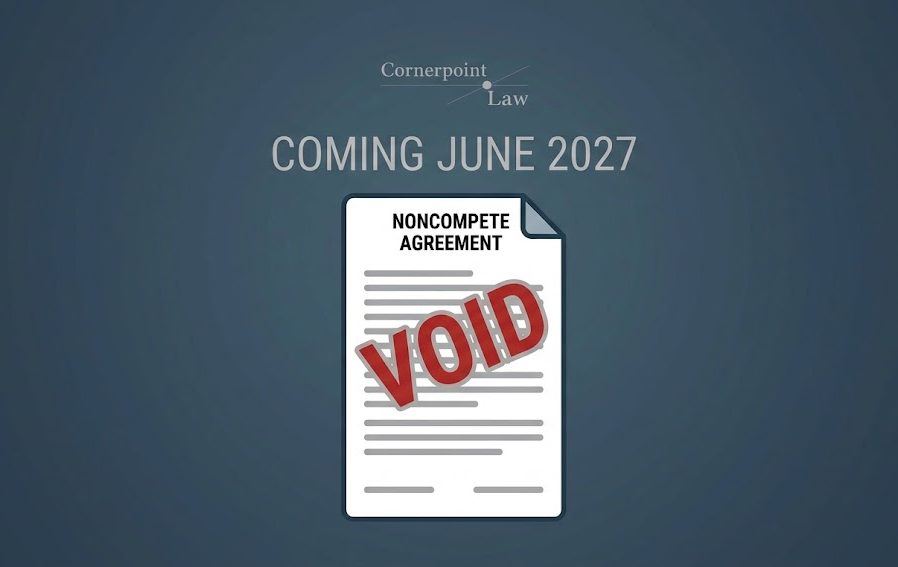
Washington State passed a major update to its noncompete law, RCW Chapter 49.62, in 2026, with changes taking effect on June 30, 2027. These changes significantly impact how businesses should structure employment and independent contractor agreements, and how professionals working under employment contracts should evaluate the restrictions tied to their work.
Whether you are a business owner focused on protecting goodwill, trade secrets, and customer relationships, or an individual navigating an offer, exit, or ongoing employment obligations, expect a dramatic shift in how noncompete provisions are approached.
This blog post outlines major upcoming changes under Washington noncompete law and what will remain the same. It also predicts how the new legal landscape will impact employers and workers.
5 Key Changes to Washington Noncompete Law
Washington’s updated noncompete law reflects a shift away from allowing the limited use of noncompetes to largely prohibiting them.
For businesses, this will change how to structure employment and contractor agreements. For individuals, it will change how to evaluate restrictions tied to work.
1. Noncompetes Will No Longer Have Salary Thresholds
Washington law currently permits noncompetes for higher-earning workers if certain thresholds are met. That framework will be eliminated.
Why you should care:
Noncompetes will be broadly prohibited regardless of compensation. A higher wage will simply no longer be relevant.
2. Existing Noncompete Agreements Will No Longer Be Enforceable
The law takes effect on June 30, 2027, but it will apply to noncompete agreements regardless of when they were entered into. Noncompete agreements that were enforceable under the previous version of the statute will not be enforceable once the new law takes effect.
Why you should care:
Washington employers and workers should not assume that noncompete agreements will be enforceable after the effective date, even if those agreements were valid when signed. Focusing solely on future contracts will not be enough. Existing agreements will need to be considered.
3. Nonsolicitation Agreements Have Been Narrowed
Nonsolicitation agreements will remain allowed, but only in a limited form. They will apply only to the solicitation of customers or prospective customers with whom the worker has established or substantially developed a relationship through their work with the employer, and must be limited to a maximum timeframe of 18 months following termination of employment.
Why you should care:
This change creates risk for businesses and potential opportunities for workers. A worker may have access to confidential customer information without having established a direct customer relationship. Therefore, limiting the disclosure of confidential information and trade secrets within a company may become more common.
4. A New Notice Requirement For Existing Noncompetes
New Washington noncompete law will include a major change on communication obligations. When the law takes effect, employers must provide written notice to current and former workers that their existing noncompetes are void (if they are still within their stated duration). This is an affirmative employer obligation, with compliance due by October 1, 2027.
Why you should care:
This will be a look-back exercise. Businesses will need to identify existing agreements that are still within a restrictive time period and notify affected Washington workers.
5. Financial Penalties Tied To Competition Are Explicitly Treated As Noncompetes
A noncompete agreement will include those provisions that require an individual to repay, forfeit, or lose compensation or benefits as a result of engaging in lawful competition.
Why you should care:
Provisions tied to bonuses or other compensation will be unenforceable if they also function as a penalty for lawfully competing. Both businesses and workers should evaluate whether such terms effectively restrict competition.
5 Things That Will Not Change Under Washington Noncompete Law
1. Nonsolicitation Agreements Will Still Be Allowed
Nonsolicitation provisions will still be permitted if they meet the new, narrower definition under Washington law.
Why you should care:
Carefully drafted nonsolicitation agreements may still provide a balance of protecting business relationships without overreaching into restrictions on competition.
2. Confidentiality and Trade Secret Protections Will Still Apply
Confidentiality agreements and trade secret protections will still be allowed under Washington law.
Why you should care:
As with nonsolicitation agreements, nondisclosure and confidentiality agreements will likely continue to play a central role in protecting business information, and may become more complex when noncompetes are no longer available.
3. The Law Will Still Apply To Both Employees and Independent Contractors
Coverage under Washington noncompete law will still extend to both employees and independent contractors.
Why you should care:
Washington noncompete law applies beyond the usual employment relationship. Independent contractors are frequently self-employed business owners, so the law will still reach a wider range of workers.
4. Noncompetes For Business Owners Will Still Be Allowed
Noncompetes will still be enforceable when the Washington worker is also an owner in the business (with at least a 1% ownership interest).
Why you should care:
When a worker owns at least a 1% stake in the business, noncompetes may still be used in connection with ownership interests, including entry and exit scenarios. This will likely remain an important negotiation tool in business ownership.
5. Employer Liability Will Not Be Limited To Enforcement
Washington noncompete law will continue to prohibit employers from forcing workers to sign an unenforceable noncompete agreement, from attempting to enforce a nonenforceable noncompete against a worker, and from representing that a nonenforceable noncompete applies to a worker.
Why you should care:
Violations will still result in statutory damages of at least $5,000, plus attorneys’ fees and costs, even where no enforcement action is taken. The statute reaches the use, not just enforcement, of noncompete provisions.
Meet Attorney Stacia Hofmann: Specializing in Business and Employment Contracts
As an attorney specializing in business and employment agreements in Washington and Idaho, Stacia Hofmann and Cornerpoint Law help business clients draft noncompete, nonsolicitation, and nondisclosure agreements, and help employee and self-employed clients negotiate and interpret those agreements. Her goal is to assist all clients in managing risk and setting professional goals. She wrote about noncompete agreements under prior Washington law here and here.
Email or call Stacia to see if Cornerpoint can help with your questions about noncompete, nonsolicitation, and confidentiality agreements.